

School Refusal Program: An Exposure-Based Path Back to School
What Is School Refusal?
School refusal is not defiance, laziness, or a lack of motivation. It is an anxiety-based difficulty attending school. Children and teens who struggle with school refusal often experience intense emotional distress at the thought of going to school—worry about separation from caregivers, fear of social situations, performance anxiety, panic symptoms, or overwhelming perfectionism.
Common signs may include:
Frequent physical complaints (stomachaches, headaches) on school days
Tearfulness, panic, or meltdowns before school
Difficulty separating from caregivers
Avoidance of specific classes, peers, or school settings
Prolonged absences or repeated late arrivals
At its core, school refusal is rooted in anxiety. When a child avoids school, their immediate anxiety decreases. While this relief feels helpful in the short term, it unintentionally strengthens the anxiety over time. Avoidance teaches the brain that school is dangerous – making the next attempt even harder.
Our program is designed to gently reverse this cycle.
Our Three-Component Program
School refusal affects the entire system around a child. That’s why our program includes three coordinated components:
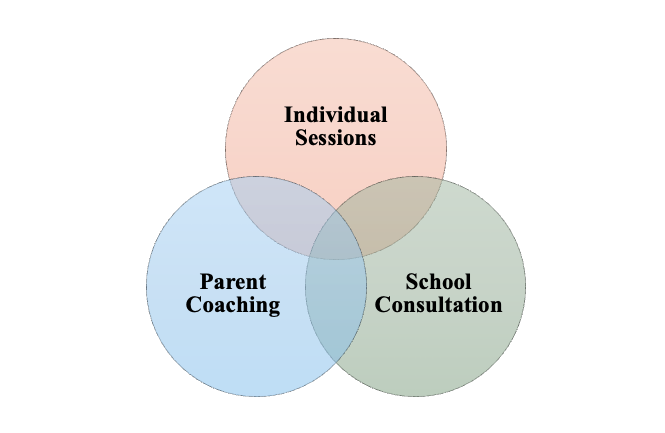
Individual Sessions: In one-on-one sessions, children and teens learn practical anxiety management tools and begin structured exposure work tailored to their specific fears. This includes:
Understanding how anxiety works in the brain and body
Identifying avoidance patterns
Building a personalized exposure ladder
Practicing gradual return-to-school steps
Strengthening coping skills and confidence
Sessions are active and goal-oriented. Progress is measured by increased participation and school attendance – not just reduced anxiety.
Parent Coaching: Parents play a powerful role in helping their child move toward brave behavior. However, supporting a child who struggles with school attendance can feel overwhelming, and it’s natural for parents to wonder what will actually help. In coaching sessions, parents learn how to:
Set reasonable expectations for school attendance and participation
Reinforce effort and brave behavior
Respond to anxiety with calm confidence
Reduce accommodations that maintain avoidance
Manage morning routines effectively
Plan ahead for anticipated challenges
The primary goal of parent sessions is to empower caregivers with concrete strategies for navigating the complexities of school refusal. We remove the guesswork, helping parents feel more confident and effective in guiding their children towards school success.
School Consultation: Successful return-to-school plans require collaboration. We consult directly with school staff to:
Develop gradual re-entry plans
Identify appropriate temporary supports
Align expectations across home and school
Problem-solve barriers to attendance
Fade accommodations strategically over time
The goal is not to create long-term avoidance-based adjustments, but to support a steady return to full participation.
Why We Use an Exposure-Based Model
Our approach is grounded in exposure-based cognitive behavioral therapy (CBT), the gold-standard treatment for anxiety. Exposure therapy helps children gradually face the situations they fear in a structured, supported, and compassionate way.
Rather than eliminating anxiety before returning to school, we help children and teens:
Build tolerance for uncomfortable feelings
Learn that anxiety rises and falls naturally
Discover they can handle more than they think
Replace avoidance with confidence and resilience
Research consistently shows that gradual, repeated exposure is the most effective way to reduce anxiety long-term. By helping children and teens face school-related fears step-by-step, we help retrain the brain’s alarm system and restore consistent attendance patterns.
Why This Approach Works
Avoidance shrinks a child’s world. Exposure expands it.
By combining child skill-building, parent guidance, and school collaboration, our program addresses school refusal from every angle. The exposure-based model works because it directly targets the mechanism maintaining the problem: avoidance driven by anxiety.
Children do not need to feel calm before going back to school. They need structured opportunities to practice going to school while feeling anxious—and learn they can succeed anyway.
With the right support, school can become manageable again. Confidence grows. Attendance stabilizes. Families regain their mornings—and students reclaim their education.
If your child is struggling with school attendance due to anxiety, early intervention makes a difference. Our program provides a clear, compassionate, and research-supported path forward.
Interested in getting started?
Contact Thriving Minds’ intake coordinator at 734-433-5100 or fill out an online appointment request form. The first step will be to schedule a parent-only initial consultation session with the Director of School Refusal, Dr. Becky Thomson, who will help determine treatment goals and the appropriate treatment approach based on your child and family needs.
Have questions?
Contact the Director of School Refusal (Dr. Becky Thomson):
Email | bthomson@thrivingminds.info
Phone | 734-433-5100 x302